Beech
We are fortunate to have many beautiful mature beech trees at Bank Woods. We have planted 70 saplings in the centre of Dacre Woodlands. They will form a notable feature in a few decades.
One of our best known trees, in a prominent position towards the top of Bank Woods is a beech. She is known as Lovers’ Beech because of the many lovers’ initials carved into her limbs.
A mature beech tree can grow to more than 40 m tall. They create a dense leafy canopy which is bright green in spring, and turns golden-brown in autumn. Beech is a long-lived tree, and we have many which may be well over 100 years old. The beech is recognised as the ‘Queen’ or ‘Mother’ of the woodland, and has traditionally been linked to fertility
Beech trees retain their dead leaves throughout winter, an attribute called ‘marcescence’. Beech nuts with prickly seed cases appear in autumn and are triangular in cross-section. The nuts, or ‘mast,’ are eaten by birds and many mammals including squirrels, mice and voles. The caterpillars of many moths can be found on the foliage.
The beech trees in our woodland provide an important habitat for many moths and butterflies. The shade created by the dense canopy encourages growth of rare shade-loving plant species, in particular English Bluebells, and other Ancient Woodland Indicator Species. Hole-nesting birds and wood-boring insects make their homes in the gnarled trunks and branches, and a variety of fungi, mosses and lichens can be found on the bark.
Beech timber was traditionally used to smoke herring and can be used for furniture making, as well as fuel. Forked beech twigs are traditionally used for divining.
Bird Cherry
Bird cherry is a common native tree, often found in wet woodlands, and alongside rivers and streams. We have planted it at Sylvan Nature Reserve, in the parts prone to flooding, and it also thrives along the streams in Bank Woods and Dowgill Grange.
It is a fairly small tree, growing to a height of 15 metres. Its spikes of sweet smelling white flowers, blooming in late April give it the regional name of ‘wild lilac’ in Yorkshire.
A distinctive feature of Bird Cherry is that is has an in-built natural ‘pest control’ system. The leaf stalk has 2 ‘glands’. If aphids or other pests attack the tree, these glands secrete a substance which attracts predatory insects, like ladybirds, which will then eat the pests. This in turn protects the tree from the pests.
The early flowers provide much needed nectar for bees and other pollinating insects. Its leaves are food for the caterpillars of many types of moths. It’s almost black, bitter cherries, borne in late summer, are eaten and spread by many birds and small mammals. The bark of the Bird Cherry has an unpleasant smell. The bark, roots and fruits were used to dye fabrics.
Crab Apple
A crab apple tree can grow up to 10m tall, and live for 100 years. They are the predecessor of cultivated apples.
We have a beautiful and huge veteran Crab Apple at Bank Woods.
Crab apples have sweetly scented blossom in April and May, which is pollinated by bees and other insects. Later, small, apple-like fruits develop which can be yellow or green or flushed red. These are eaten by birds and mammals which disperse the seeds.
The caterpillars of many moths live on crab-apple leaves. The flowers provide a good source of early pollen for bees and other insects. Many birds and mammals eat crab apple fruit. Crab apples are traditionally associated with love and marriage, and also in ancient healing ceremonies.
The crab apple fruit is a source of pectin, which helps jam to set. The wood of the crab apple tree is good for carving.
Dogwood
Dogwood is a shrubby tree which can grow to 10m tall when mature.
In spring, it produces small, cream flowers which smell unpleasant. These are followed by small black berries. Characteristically, the twigs facing the sun are red, whereas those in the shade are lime green. The leaves turn a lovely red before falling in autumn.
Dogwood leaves are eaten by moth caterpillars. The flowers provide pollen for insects, and the berries are eaten by mammals and birds.
Skewers used to be called ‘dogs’, which is how the dogwood got its name – its smooth straight twigs, were used to make butchers’ skewers.
Hawthorn
Hawthorn trees can grow up to 15m tall and have a dense habit, and thorny branches. They are often used in hedges. The flowers, which bloom in May are white or pink. They later develop deep red fruits called ‘haws’.
Hawthorn supports many species of insects, and the leaves are the food for caterpillars of many moths. Its flowers provide nectar and pollen for bees and other pollinating insects. Haws provide food for many birds and small mammals.
Many species of bird like to nest in hawthorn trees, as the dense thorny branches and thick foliage provide excellent shelter.
Hawthorn wood is good fire wood, and is said to burn at a high temperature. Legend has it that Jesus’s crown of thorns was made of hawthorn. In Celtic folklore Hawthorn is known as the magic tree of the fairies.
Hazel
Hazel can grow to 12 m tall and can live for hundreds of years. It is often coppiced, to harvest timber, and we have examples of this at Bank Woods.
It is an important element of the ‘understorey’ of woods of oak and birch. The leaves are covered in soft hairs. The male ‘catkins’ appear from mid-February; the hazel nuts develop in autumn.
Hazel leaves provide food for many kinds of moths, and its branches provide shelter for many ground nesting birds. Hazel flowers provide early pollen for bees, and the fruits are food for many birds and small mammals.
Hazel is known in Celtic folklore as the tree of creative wisdom. It is said to be a ‘magical’ tree – its branches are used to make water–divining rods. Hazel wood is said to be the best wood for making Morris dancing sticks, being straight and sturdy and making a satisfying sound when struck!
Lime
Lime (or linden) is often planted in towns, but was one of the original native trees of northern Europe. It can grow to 30 metres tall.
The leaves are a very characteristic slightly asymmetrical heart shape. They are a very attractive food source for aphids, which in turn attract predators like hoverflies, ladybirds and birds. They also support the caterpillars of many moths.
It is aphids which produce the honey dew which falls from lime trees and makes sticky marks on cars parked underneath. The white flowers hang down in clusters, providing nectar and pollen for bees. They are accompanied by adapted leaves called bracts, which later help the hard seeds to be dispersed by the wind.
Oak
An oak tree can grow to 40 m tall, and live for hundreds of years. It is the commonest and possibly the best loved British native tree.
It has catkins, with airborne pollen, and then produces acorns, but not until it is at least 40 years old.
Most acorns never get the chance to germinate, before being eaten. We are pleased to see new oak trees growing from lucky acorns which germinated at Bank Woods.
Oak trees support more life than any other native tree. They host hundreds of species of insect, which provide many birds with food. In autumn many birds and mammals including mice, badgers, squirrels and deer enjoy eating the acorns. Birds and bats roost in oak trees, and feed on the rich supply of insects.
The oak is the symbol of strength and survival, and is often associated with royalty, being called ‘The King of the Forest’. In Celtic folklore, oak is the doorway to knowledge and wisdom.
Oak produces strong hardwood which is still used in construction.
Rowan
A rowan tree can grow to 15 m tall, and live for 200 years.
A rowan tree has clusters of tiny cream flowers, which develop into scarlet berries with seeds which are dispersed by birds. Several moth caterpillars live on rowan leaves. Rowan flowers provide pollen and nectar for bees and other pollinating insects. In autumn, the berries are a good source of autumn food for many species of bird.
Rowan berries, although sour, are edible to humans.
Rowan was thought to protect against witches! In Celtic mythology, Rowan is known as the tree of life.
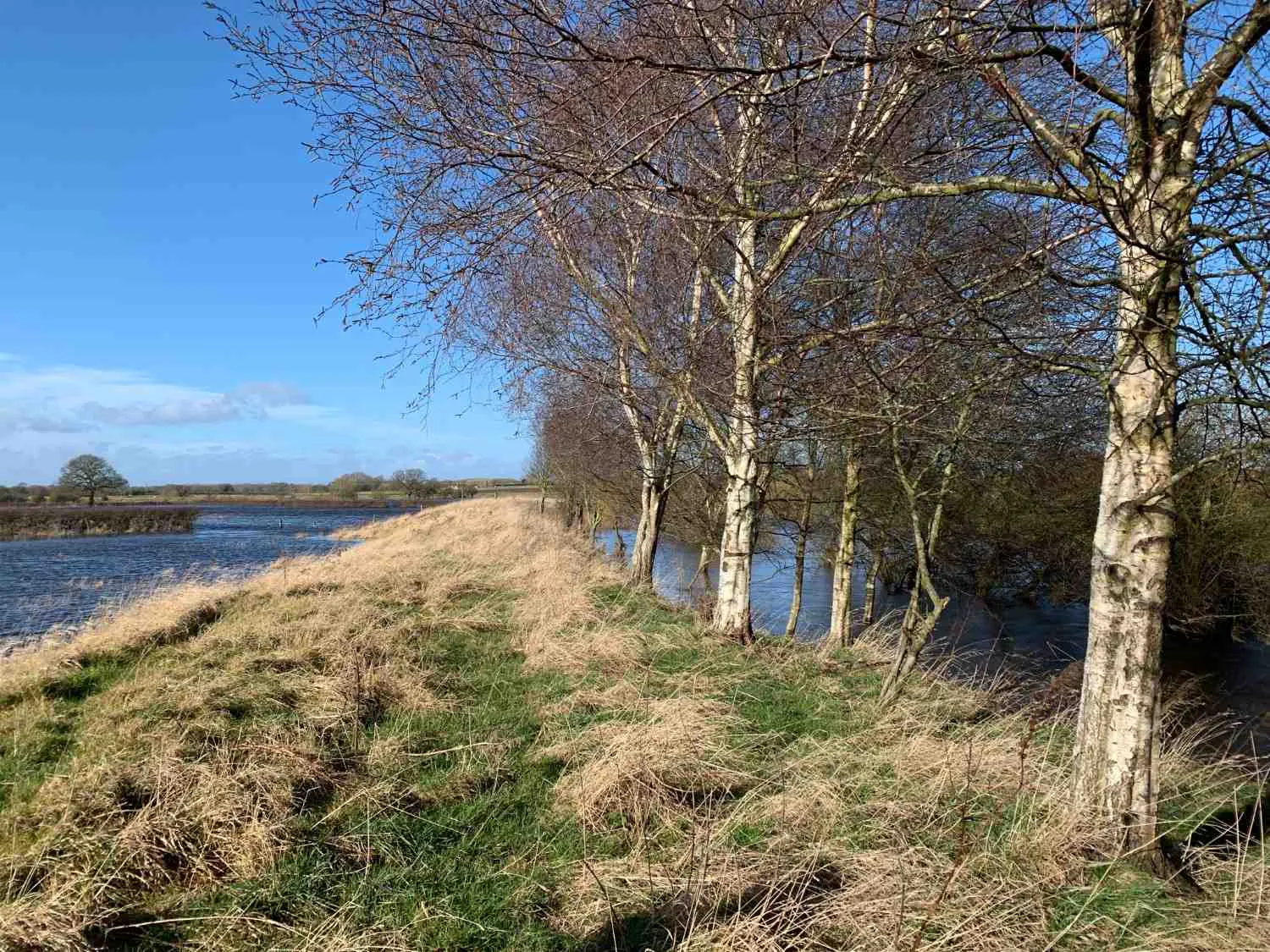
Silver Birch
A birch tree can grow to 30m tall; it has deep roots which can reach nutrients deep down in the soil. The birch is highly adaptable and can thrive in harsh conditions.
Silver Birch is a ‘pioneer’ tree, and is one of the first trees to establish among gorse or brambles, as part of natural regeneration of woodland. We have lots of self sown silver birches at Bank Woods. Catkins appear in April, and after pollination, tiny seeds are spread by the wind.
Birch forms a light canopy which lets light through so that woodland flowers can grow. This is one of the reasons we love to plant them at Sylvan Nature Reserve, Bank Woods and Dowgill Grange.
Birch trees provide food and habitat for many insect species. Woodpeckers and other birds often nest in the trunk, and eat the seeds. Birch twigs are traditionally used to make a ‘besom’ or broom, and the strong wood can be used to make furniture. In Celtic folklore Birch is associated with transformation, growth and new beginnings.
Wild Cherry
Wild Cherry is a native, deciduous cherry species. It is a very attractive tree, often seen in gardens and hedgerows around the UK. It can grow to 30 metres in height, and live for 60 years.
The white flowers bloom early in the spring, at the same time as the new leaves unfurl. The leaves are the main food source for various moth caterpillars. The flowers are attractive to bees, which pollinate them. The fruits are bright red and then turn progressively darker. When mature, in mid-summer, the cherries are dark purple and make a good food-source for larger birds and small mammals. These creatures digest the flesh of the fruit, and the stones then become dispersed in their droppings. This is a fantastic way to kick-start regeneration of woodland! Some rodents, and a few birds, can crack open the stones to eat the nutritious kernel inside. This explains why you will sometimes see open, empty cherry stones in our woodland.
In autumn, Wild Cherry leaves are particularly beautiful, turning shades of orange, red or pink before they fall.
It is known that humans have eaten Wild Cherries for several thousands of years. Cherry stones have been found in bronze age settlements all over Britain.
Cherry timber is considered to be very attractive, and is still used for furniture and veneers. The wood burns well with a sweet smelling smoke.